If you’re still thinking of SEO as “ranking pages on Google,” 2026 is going to be uncomfortable. Because now your 2026 SEO framework has to focus on Google, AI, and social search platforms.
Your customers now search everywhere on Google, YouTube, TikTok, LinkedIn, marketplaces, and increasingly inside AI-powered answer engines like ChatGPT, Gemini, and Perplexity. If your brand is not visible across these environments, you are invisible during key buying moments.
Quick Stats:
84.58% of users have increased their AI usage in the past 12 months. (Exploding Topics)
Nowadays, people discover brands:
- On social platforms
- Research on video and community-driven sites
- Validate opinions through reviews
- Ask AI tools to summarize, compare, and recommend
People no longer just want answers. They want proof. They want to see products in action, hear real experiences, compare options side by side, and confirm decisions across multiple sources. In 2026, SEO is no longer platform-specific; it’s ecosystem-driven.
Let’s understand the 2026 SEO framework that will help you build visibility where buying decisions actually happen.
Key Takeaways
- Customers now search across Google, AI tools, social platforms, video, and marketplaces.
- Zero-click searches and AI answers have shifted focus from traffic to visibility.
- Search intent changes by platform and must be mapped accordingly.
- Brands need cross-platform content ecosystems, not one-off posts.
- Video and structured content are increasingly cited by AI answer engines.
- Winning in 2026 means showing up everywhere customers search and decide.
Why SEO in 2026 Is No Longer “Just Google”
For more than a decade, Google dominated how people searched. The customer journey was predictable.
Type a query – Click a result – Make a decision.
That journey no longer exists.
Now we have many search platforms that are permanently rewiring how people search, discover, and trust information. GenAI has turned everyday users into power searchers, getting answers in seconds that once required hours of research.
More importantly, user expectations have changed. Searchers want proof. They want to see products in action, hear real experiences, compare options side by side, and confirm decisions across multiple sources.
That’s the reason traditional SEO strategies aren’t giving expected results. Ranking on Google alone no longer guarantees visibility, trust, or conversions.
New Multi-Platform Search Journey
Modern search behavior is fragmented—but intentional.
A typical journey might look like this:
- A short video sparks curiosity on a social platform
- Long-form content builds understanding on video or blogs
- Community opinions validate trust
- Marketplaces or AI tools finalize the decision
Each platform places the user in a different mindset. Treating them the same is where most SEO strategies fail.
Here’s how intent actually breaks down:
| Platform Type | User Mindset | What Content Should Do |
|---|---|---|
| Social search | Discovery | Spark curiosity, show proof |
| Video platforms | Research | Educate and compare |
| Communities | Validation | Build trust and credibility |
| Marketplaces | Decision | Reduce friction, confirm choice |
| AI engines | Synthesis | Be clear, authoritative, structured |
SEO in 2026 is about matching intent, not forcing keywords.
Why Visibility Matters More Than Traffic For SEO in 2026?
One of the most important shifts in search is the rise of zero-click experiences. Many searches now end without a website visit.
Users get what they need directly from:
- Featured snippets
- Knowledge panels
- AI-generated responses
This doesn’t mean SEO is dead. It means success metrics have evolved.
In 2026, brands must optimize for:
- Being cited
- Being summarized
- Being recommended
This is where Answer Engine Optimization (AEO) and Generative Engine Optimization (GEO) become critical extensions of SEO. If your content isn’t structured, consistent, and authoritative, AI engines simply won’t trust it.
Download Free Guide for 2026 SEO Framework
5-Step SEO Framework To Dominate Search Everywhere

To succeed in this environment, brands need a system and not isolated tactics. Below is the framework we see consistently working across industries.
Step 1: Map Audience and Platform Intent
The biggest mistake brands make is trying to “be everywhere” without understanding why people search on each platform.
Your audience does not search the same way on social platforms as they do on Google or AI tools. Each environment serves a different purpose.
Start by answering three questions:
- Where does my audience actually search for answers?
- What mindset are they in on each platform?
- What type of content performs naturally on each platform?
Instead of spreading yourself too thin, identify your top 3-4 platforms and focus deeply. Mastering intent beats chasing reach.
Step 2: Build Entity Clarity and Brand Consistency
AI does not understand brands the way humans do. It understands entities: clearly defined people, companies, services, and concepts, and the relationships between them. If your brand appears inconsistent across platforms, AI struggles to trust it.
This step is deceptively simple but incredibly powerful:
- Your business name, description, and positioning must be consistent everywhere
- Your services should be clearly defined and connected
- Your expertise should reinforce the same themes repeatedly
Think of this as your brand’s digital identity layer. When entities are aligned, both search engines and AI engines know exactly who you are and what you’re known for.
Step 3: Build a Cross-Platform Content Ecosystem
Most content fails because it’s created in isolation. In 2026, winning brands build content ecosystems, not random posts.
The process looks like this:
- Start with a pillar asset (long-form blog, video, or podcast)
- Adapt it into platform-native formats
- Connect everything back to the core topic
Video plays a growing role here. AI engines increasingly reference video content when generating answers, while blogs and FAQs provide structure and clarity.
When content reinforces itself across formats and platforms, it sends a strong signal of topical authority for both humans and AI.
Step 4: Strengthen the Technical and Trust Layer
Even the best content fails without a strong foundation.
Modern SEO requires systems that make content:
- Easy to find
- Easy to understand
- Easy to trust
This includes:
- Fast, mobile-first performance
- Clean site architecture
- Structured data and schema for AI understanding
- FAQ-style content for conversational and voice search
Trust signals matter just as much. Reviews, comments, shares, and responses are not vanity metrics; they are visibility signals used by platforms to decide what gets surfaced.
Step 5: Track, Test, and Continuously Improve
SEO in 2026 is iterative by design. Winning brands don’t set strategies once and forget them. They test headlines, formats, hooks, and CTAs. They study which platforms drive real engagement and which topics gain momentum.
Tracking should focus on visibility across ecosystems, not just rankings:
- Google search presence
- AI answer citations
- Social discovery performance
Every improvement compounds. Over time, brands that adapt faster don’t just keep up, they pull ahead.
Zero To Nine Marketing: Proven Results Across SEO, AI Overviews & GenAI Search (2016–2026)
With over 10 years of experience scaling websites from scratch, we help brands grow through Search Engine Optimization (SEO), Answer Engine Optimization (AEO), and Generative Engine Optimization (GEO).
Over the past decade, we have applied this framework across multiple industries, long before AI-driven search became mainstream. Our focus has always been the same: build sustainable visibility systems instead of chasing short-term rankings.
SEO Performance Highlights (Google Search):
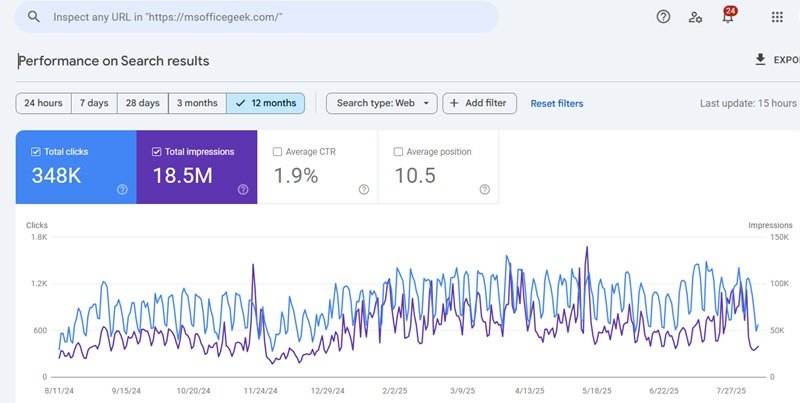
What we focus on:
- Long-term keyword growth, not short-lived spikes
- Topical authority instead of isolated rankings
- Sustainable traffic from non-branded and branded searches
AI Overviews Visibility:
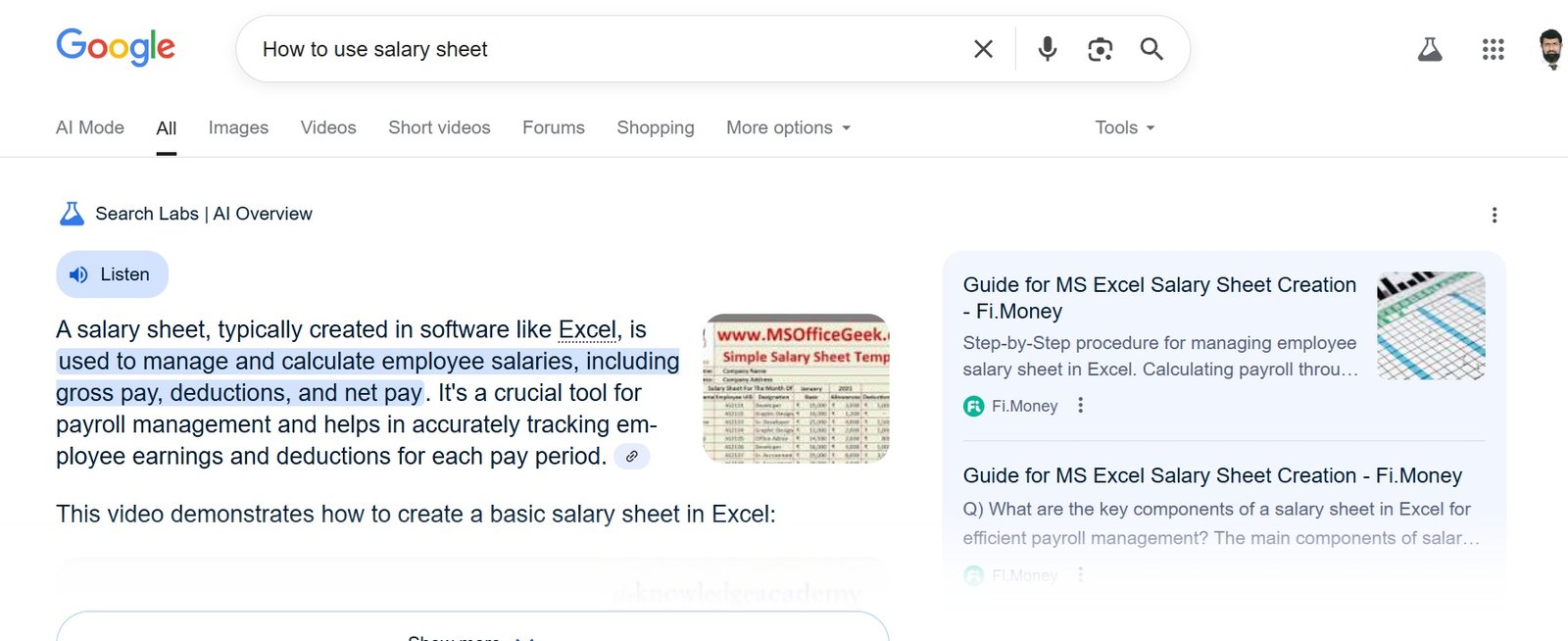
Where we’re showing up:
- AI-generated summaries for informational and commercial queries
- Featured answers replacing traditional blue-link results
- Citations sourced from structured blog content, FAQs, and videos
GenAI Engine Presence (ChatGPT, Gemini & Perplexity)

What visibility looks like:
- Brand and content referenced in AI responses
- Blogs, guides, and videos are used as supporting sources
- Consistent sentiment and positioning across AI engines
Proof of Traffic From GenAI Engines (ChatGPT, Gemini & Perplexity)

Traffic Referrals from GenAI Engines (ChatGPT, Perplexity, Gemini)

We focus on building durable visibility systems. Results vary by industry, competition, and execution timeline, but our approach is designed to compound over time rather than rely on short-term spikes.
Conclusion
This framework works because it aligns with reality. People don’t search in one place anymore. They move fluidly between platforms, and AI acts as the connective layer pulling everything together.
When brands that show up consistently across Google, AI engines, and social platforms become familiar. This familiarity builds trust, and then trust drives conversions.
SEO success in 2026 is no longer about gaming algorithms; it’s about earning relevance everywhere.
Want to see how this framework applies to your industry?
Contact us to help you map where your audience searches and design a future-proof SEO framework in 2026 to help your brand show up consistently across Google, AI, and social platforms.
Frequently Asked Questions
Is traditional keyword research still relevant in 2026?
Yes, but its role has changed. Keyword research is now a starting point, not the strategy. In 2026, successful SEO combines keywords with search intent, entity relationships, and contextual relevance so content performs across Google, AI engines, and social platforms.
How long does it take to see results from a multi-platform SEO strategy?
Timelines vary by industry and competition, but most brands start seeing early visibility signals within 4-8 weeks, especially on social and AI-driven platforms. Compounding, defensible results typically build over 3-6 months with consistent execution.
Do small businesses need to optimize for AI search engines?
Absolutely. AI search engines often favor clear, well-structured content over brand size. Smaller businesses with strong entity clarity, FAQs, and authoritative content can outperform larger competitors in AI-generated answers.
Is social media really part of SEO now?
Yes. Social platforms increasingly function as search engines, especially for discovery-driven queries. While social signals don’t directly replace rankings, they influence visibility, brand trust, and AI citations, making them a critical part of modern SEO.
How is ZeroToNine Marketing's SEO different than others?
We combine SEO and AI SEO into a single framework. With over 10 years of experience scaling websites from scratch, our approach focuses on systems, entity authority, and multi-platform visibility.